THIS PAGE IS INTENDED FOR UK PATIENTS WHO HAVE BEEN PRESCRIBED NEDITOL XL® (TOLTERODINE)
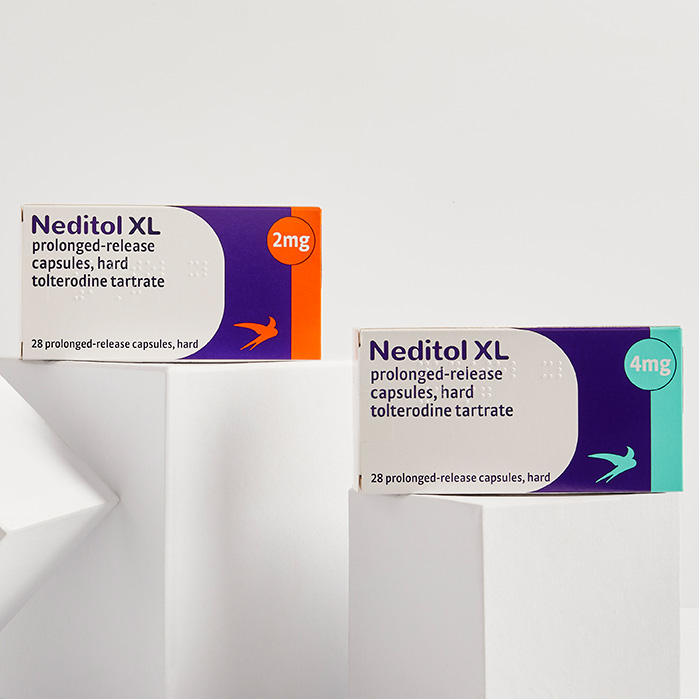
Neditol XL® (tolterodine)
Prolonged-release capsules

About Neditol XL®
Summary of Product Characteristics (SmPC) and Patient Information Leaflet (PIL)
The following links will take you to the electronic Medicines Compendium (eMC) website.
By using the links below, you will leave the Pathway Portfolio website and be re-directed to an external site. Aspire Pharma is not responsible for the content on external websites.
1
2
1
Neditol XL 2mg
2
Neditol XL 4mg
About Urge Incontinence and Overactive Bladder
Definitions
Urge Incontinence
Urge incontinence is a common form of incontinence. You have an urgent desire to pass urine and sometimes urine leaks before you have time to get to the toilet. Urgency and urge incontinence are often symptoms of an unstable or overactive bladder, also known as detrusor instability. (The detrusor muscle is the medical name for the bladder muscle.)1,3
Overactive Bladder (OAB)
OAB syndrome means that the bladder, which is a bag made of muscle, squeezes (contracts) suddenly without you having control and when the bladder is not full. OAB syndrome is a common condition where no cause can be found for the repeated and uncontrolled bladder contractions. (For example, it is not due to a urine infection or an enlarged prostate gland.)2
Causes
Some women develop urge incontinence after the menopause and this is thought to be due to thinning of the lining of the urethra (tube that passes urine from the bladder out of the body) due to a drop in the level of the female hormone oestrogen.1
In some cases, symptoms of an overactive bladder develop as a complication of a nerve- or brain-related disease. Examples are following a stroke or spinal cord damage, or with illnesses such as Parkinson’s disease or multiple sclerosis (MS). Similar symptoms may occur if there is irritation in the bladder. Bladder irritation can occur when you have a urinary tract infection (UTI) or stones in your bladder.2
In most people, the reason why an overactive bladder develops is not known. In such cases, the condition is called overactive bladder syndrome or idiopathic urge incontinence. The bladder muscle (detrusor) seems to become overactive and squeeze (contract) when you don’t want it to. Symptoms may become worse at times of stress. Symptoms may also be made worse by caffeine in tea, coffee, cola, etc and by alcohol.1
Resources
By using the link below you will leave the Pathway Portfolio website and be re-directed to an external site; Aspire Pharma is not responsible for the content on external websites.
Urge Urinary Incontinence (UUI)


Overactive Bladder (OAB)
References:
- Patient: Urge Incontinence. https://patient.info/womens-health/lower-urinary-tract-symptoms-in-women-luts/urge-incontinence (accessed June 2026)
- Patient: Overactive Bladder Syndrome. https://patient.info/womens-health/lower-urinary-tract-symptoms-in-women-luts/overactive-bladder-syndrome-oab (accessed June 2026)
- NHS: Urinary incontinence. https://www.nhs.uk/conditions/urinary-incontinence/ (accessed June 2026)
MAT-UK-XLP-0053-1 | June 2026
